
Lion of Judah Construction
Storm & Hail Damage Roof Repair in Ellis County, TX
After the storm, get answers you can trust. Our local, faith based team inspects your roof, documents the damage and helps you understand your repair, replacement and insurance options across Ellis County and DFW.
What hail and wind actually do to a roof
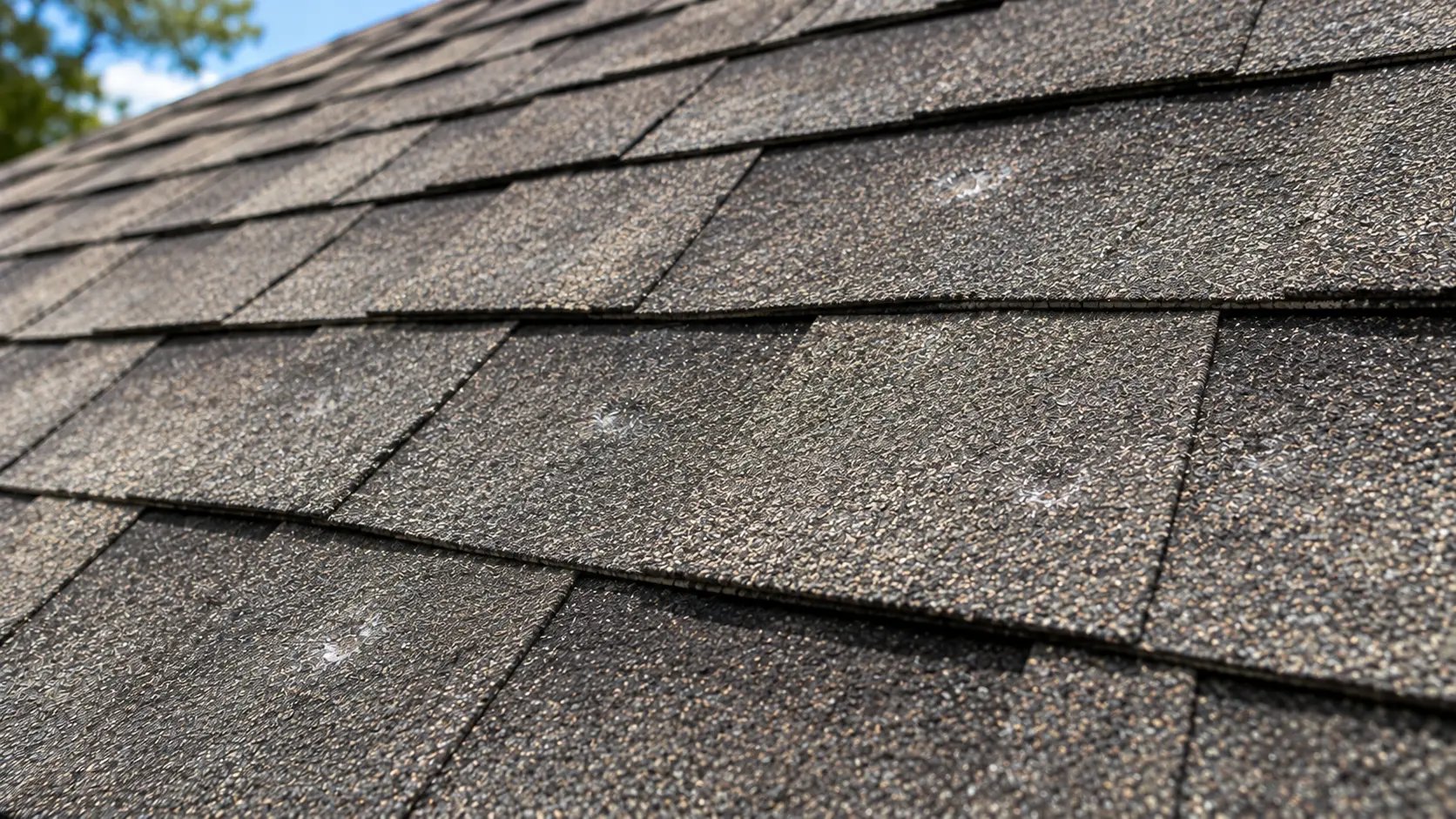
Hail damage is not always a hole you can see from the driveway. When hail strikes an asphalt shingle, it can bruise the surface and fracture the reinforcing mat underneath. The shingle may remain in place while losing some of its ability to shed water. Impact marks can look very different depending on the roof's age, material and condition, which is why a close inspection matters more than guessing from the street.
Granules protect the asphalt from sunlight and weather. A hail impact can dislodge them and expose the material below, but granule loss can also come from normal aging. We look at the pattern of damage, the condition of neighboring shingles and other roof components before recommending a next step. A few loose granules alone do not prove that a storm damaged your roof or that replacement is necessary.
Wind can lift shingle edges, break the adhesive seal and leave creases where tabs bend. Some tabs settle back down after the storm, hiding the problem from the ground. Ridge caps, flashing and exposed roof edges can also be affected. Dented vents, gutters and other soft metal components help document the storm's effects, but metal dents alone do not establish the condition of the shingles. We inspect the roof as a complete system.
Signs you have storm damage
Start with what you can safely see from the ground. These clues are reasons to request an inspection, not a diagnosis or an automatic reason to file a claim. A roof can have damage without any obvious exterior signs, and a visible dent may be cosmetic rather than a functional failure. Keep a record of anything that changed after the storm so we can compare your observations with the roof inspection.
- Unusual piles of shingle granules at downspout outlets or in gutters visible from ground level.
- New dents in gutters, downspouts, outdoor AC fins or other exposed metal surfaces.
- Shingles or pieces of roofing material in the yard, or roof edges that look uneven.
- New ceiling stains, dripping water or damp areas inside the home.
- Fresh dings on vehicles, patio furniture or other objects exposed during the storm.
What to do right after a storm
Your safety comes before the roof. Wait until severe weather has passed, avoid downed power lines and unstable trees, and do not enter a room with a sagging ceiling. If there is an immediate danger, contact the appropriate emergency service. Once conditions are safe, these five steps help protect your home and preserve useful information without putting you on a wet or damaged roof.
Stay off the roof
Wet shingles, loose materials and hidden damage make climbing dangerous. Leave roof access to a properly equipped professional. Do not use a ladder to investigate damage while the weather is unsettled.
Photograph what you can see
Take pictures from safe ground level and document any interior stains or leaks. Note when you noticed each problem and keep earlier roof photos if you have them. Do not move into hazardous areas to get a better picture.
Limit active leak damage safely
Move belongings away from dripping water and use a container only where it is safe. Ask a roofing professional about temporary protection instead of climbing up to install a tarp yourself. Keep receipts for reasonable protective measures and check your policy's requirements.
Call for a free inspection
Lion of Judah Construction will inspect the roof and document what we find. Tell us about any active leak when you call so we can understand the situation. We will explain the findings and discuss the appropriate repair or replacement options.
Make an informed claim decision
Review the documented damage, your deductible and your policy with your insurer before deciding how to proceed. Keep reporting deadlines in mind rather than delaying a required notice while you gather information. We can provide roofing documentation, but your carrier determines coverage.
Hail season in North Texas
Spring brings recurring severe weather concerns across Ellis County and the DFW area. Hail, high winds and heavy rain can affect the same home during one storm, and roof problems sometimes become apparent only when the next rain arrives. Storms can also occur outside spring. A recent storm is a good reason to pay attention to changes around your home, but the inspection should distinguish new damage from normal wear or an older unresolved issue.
Timing matters because insurance policies commonly set conditions and deadlines for reporting damage. There is no single deadline that applies to every homeowner. Read your policy, ask your carrier about notice requirements and document the date you first discovered the problem. Preserve photos, inspection notes and correspondence. If you do not know when damage occurred, be clear about that rather than selecting a storm date just to support a claim.
Our storm damage process
We begin with an inspection and photo documentation. We check shingles, roof edges, ridge caps, flashing, vents and drainage components to understand where storm effects are present and whether water protection has been compromised. Then we explain what the findings mean in plain language. Our faith based approach starts with honesty: if the roof does not show damage that justifies pursuing a claim, we will tell you that instead of pushing a replacement.
If you choose to report the damage, we can meet your insurance adjuster on the roof and share the documented roofing findings. We review the proposed scope for the work needed to restore the roof and help identify missing roofing items. When additional supported work is discovered, we provide documentation for a supplement request. The carrier reviews that request and makes its own coverage and payment decisions. We do not promise claim approval or a particular payout.
Once the scope and your responsibilities are clear, we discuss repair or replacement, material choices and scheduling. The work should address the affected roof components, not simply make the surface look better. We finish with a walkthrough, explain the completed work and answer your questions. You stay informed through the process, including any decking concerns or changes discovered during the job. Clear communication is part of treating your home with the care we would want for our own.
Repair or full replacement?
A localized area of damage on an otherwise sound roof may be a good candidate for repair. We consider the extent of the damage, the age and flexibility of the shingles, the condition of the surrounding roofing and whether suitable materials are available. Repairing a vent, flashing detail or a limited group of shingles can make sense when it restores reliable protection without disturbing a larger fragile area.
Full replacement may be the better option when damage is widespread, shingles are too brittle to repair reliably or multiple roof sections have lost their ability to protect the home. Roof layout, existing layers and any underlying damage also affect the decision. We explain the reasoning and the scope rather than assuming every storm means a new roof. If insurance is involved, a contractor's recommendation and the carrier's coverage determination are separate decisions.
Impact resistant shingles
A roof replacement is an opportunity to compare shingle options, including products with a Class 4 impact rating under UL 2218. That rating describes performance in a specific impact test, not a promise that hail can never damage the roof. Installation quality, ventilation, flashing and the rest of the roofing system still matter. We can walk through suitable materials and appearance choices so you can weigh the options for your home.
Many Texas insurers offer premium discounts for qualifying impact resistant roofing, but eligibility and savings vary by carrier and policy. Ask your insurer which products qualify, what proof of installation it needs and whether the policy's coverage terms change. Get those answers before choosing a product based on an expected discount. If your neighborhood has an HOA, confirm any color or material approval requirements before ordering roofing materials.
Storm damage roof repair near you
We serve homeowners throughout Ellis County and DFW. Explore roofing services in your city, or call to discuss an inspection at your address.
Common questions
Storm damage roofing FAQ
Get in touch
Request a free storm damage inspection.
Tell us what happened and whether you have an active leak. We will follow up to discuss your roof and the next steps. No pressure to file a claim or replace a roof that can be repaired.
Call 682-384-4231Get an honest answer about your roof.
From the first inspection to the final walkthrough, we are here to help you protect your home with clear answers and careful work.
Get a free storm damage inspection